Work  /  Patient Voice: Robert, 68

Sample project · AI patient video

Patient Voice: Robert, 68

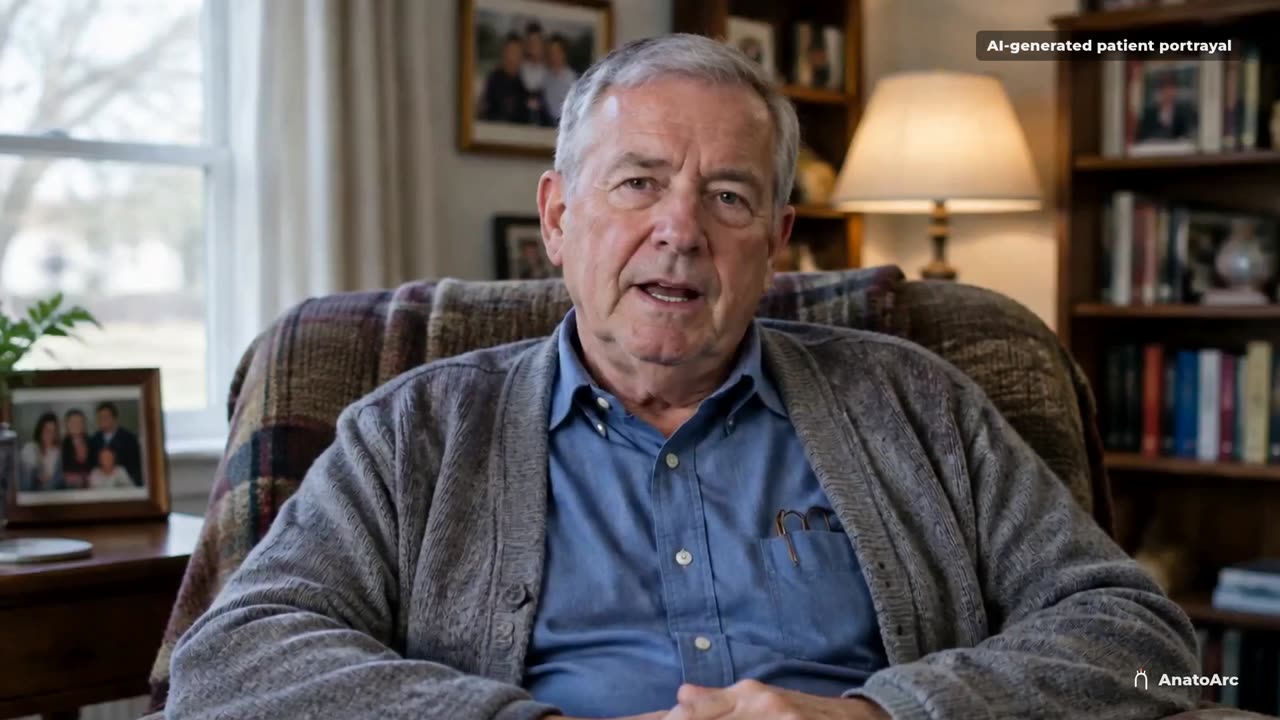
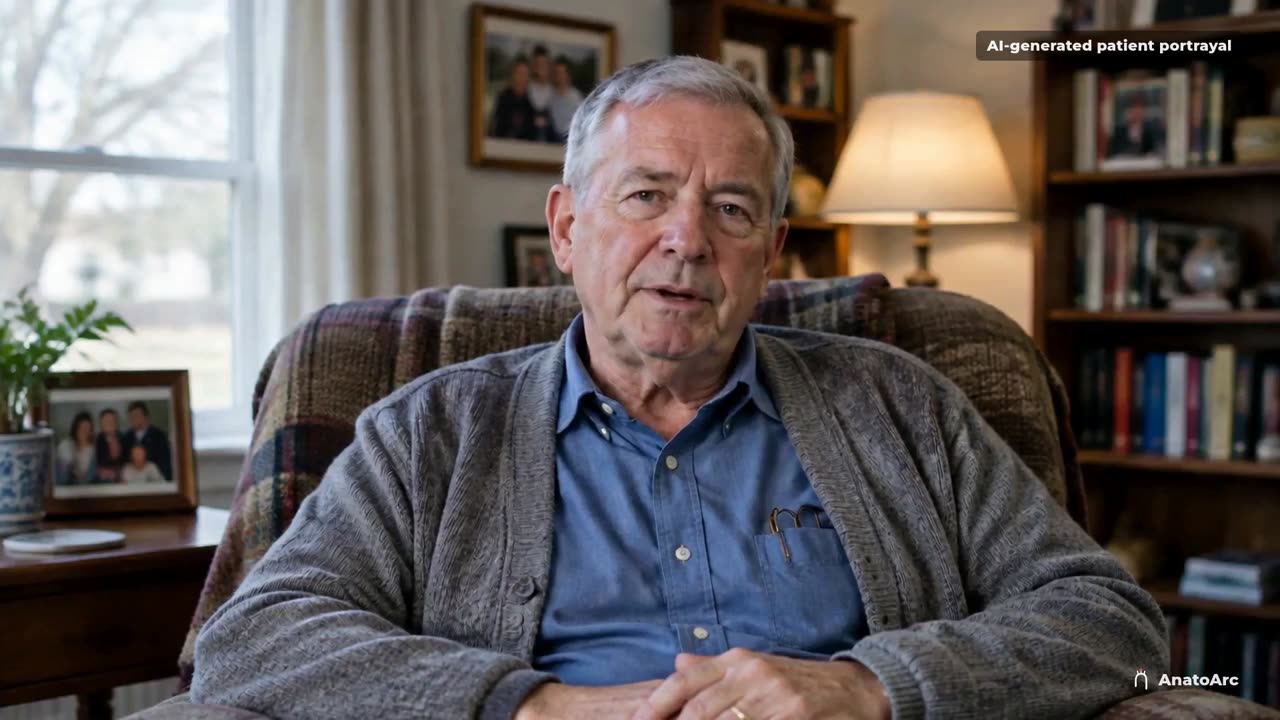
An AI-generated patient who talks through a real treatment decision on camera, for shared decision-making and education programs.

  • Format · AI patient video
  • Type · Patient voice
  • Length · 55 seconds
  • Audience · Patient programs and HCP training

This is an AnatoArc sample project, made to show our approach. It is not client work and is not medical advice.

The brief

A patient's perspective, without a film shoot

Education programs often need a patient's point of view on camera, but filming real patients is slow, expensive and hard to approve. An AI patient makes a specific case available in days, and lets you write the case to fit the learning goal.

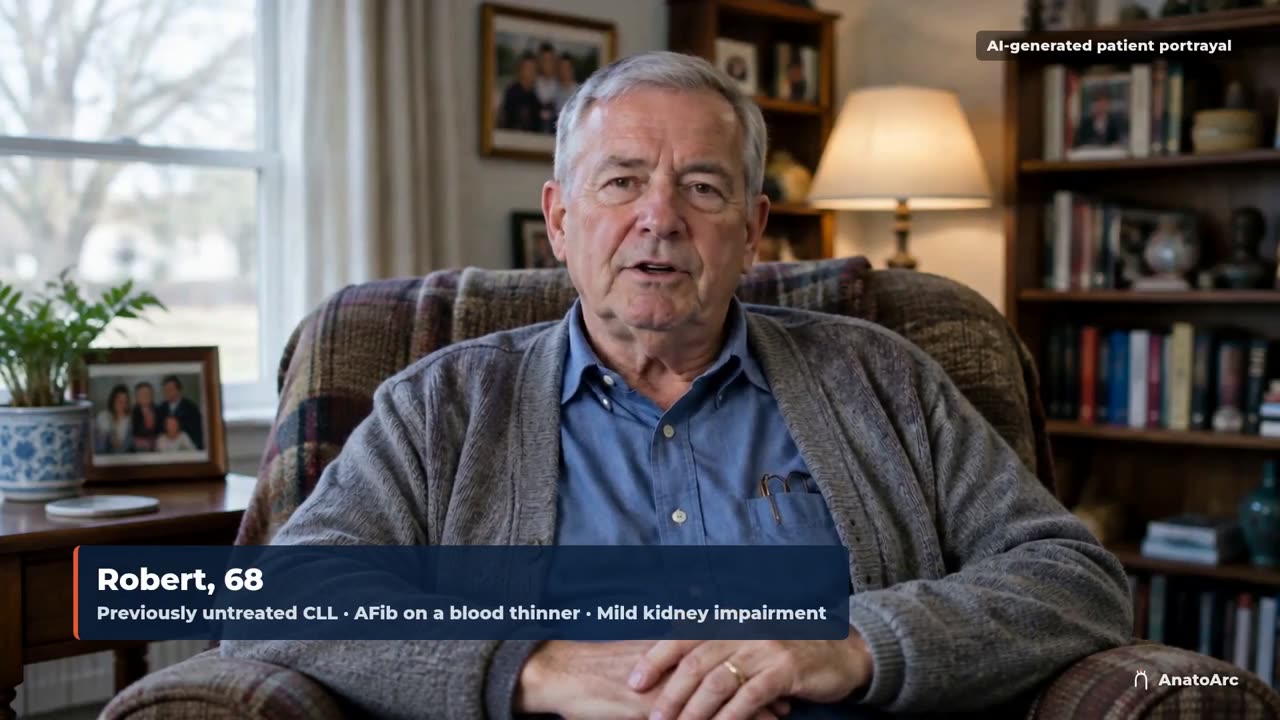
Robert is 68, with previously untreated CLL. He's weighing an ongoing pill against a treatment with a stopping point, while managing a blood thinner for AFib, mild kidney impairment and an hour's drive to the clinic.
How we built it

Believable on camera, and honest about being AI.

01

Character and setting

A consistent portrait and home setting designed to fit the patient's age, background and story.

02

Natural performance

Each line is performed with native lip-sync and then conformed to one consistent character voice.

03

Line-by-line QA

Every line is transcribed and checked word for word, and the mouth movement is reviewed frame by frame.

04

Disclosure and context

An on-screen AI label and a lower third with the patient's age, diagnosis and relevant conditions.

Inside the video

Opening with on-screen patient context
Robert weighs an ongoing pill against a fixed stopping point
Raising his questions about safety and everyday life

Details that matter

The small decisions a medical, legal and regulatory reviewer will look for.

  • Clearly disclosed. An "AI-generated patient portrayal" label stays on screen the whole time.
  • Exact medical wording. Each line is transcribed and checked, so details like "a blood thinner for my heart" come out exactly as written.
  • Clinically coherent case. Age, diagnosis, other conditions and practical barriers all fit together and drive his questions.
  • No product claims. Robert describes options and asks questions. He never names or endorses a specific therapy.

Want one like this?

What a project like this includes

  • Patient persona and script written to your learning objectives
  • Consistent character design and setting across a series
  • Natural lip-synced performance with a consistent voice
  • Disclosure label, patient lower third and your branding
  • Two rounds of revisions

Need patient voices for your program?

Tell us what you're working on. We'll reply with a plan and a quote.